HIMS
1. Multi-Dashboard
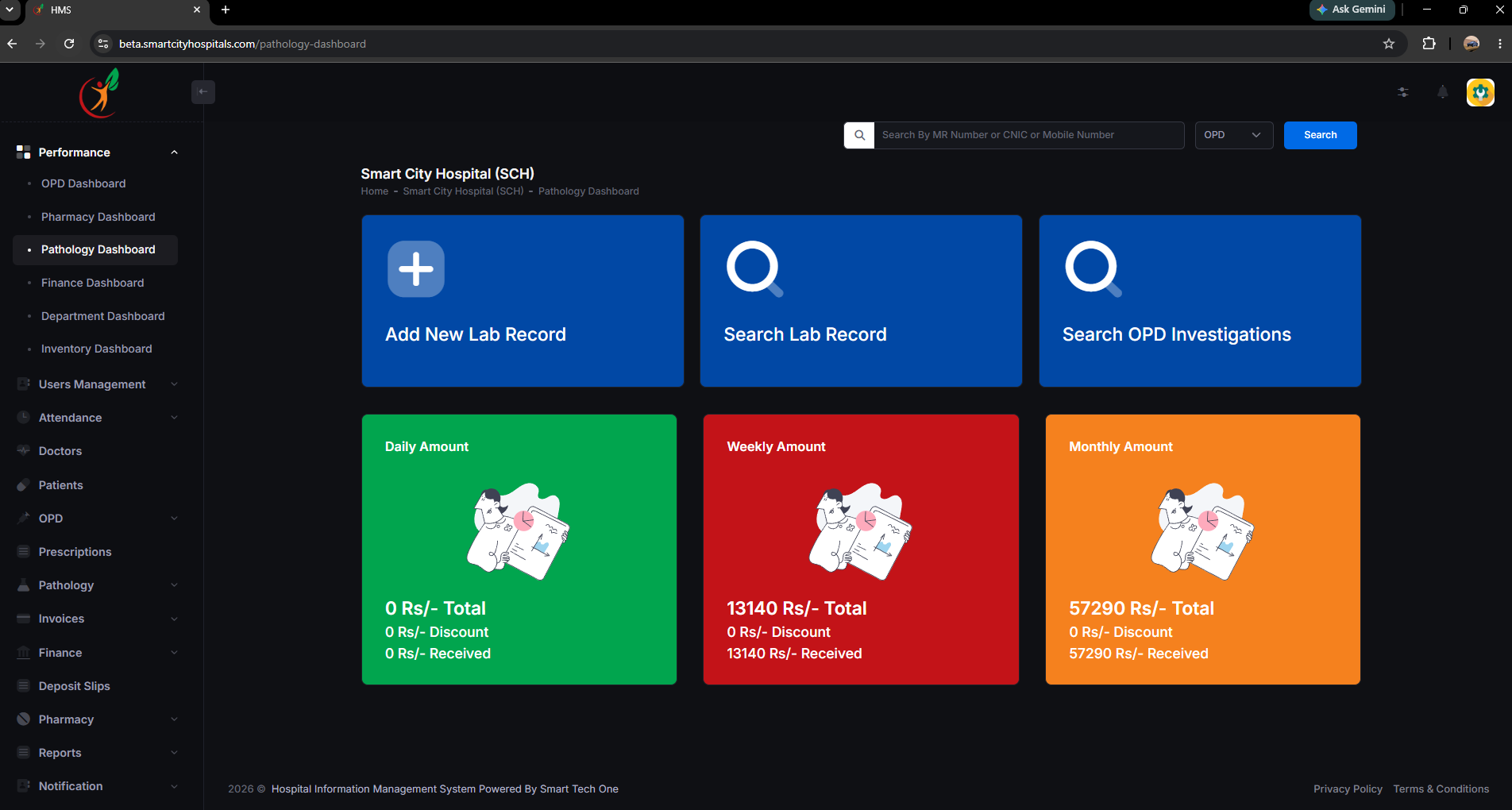
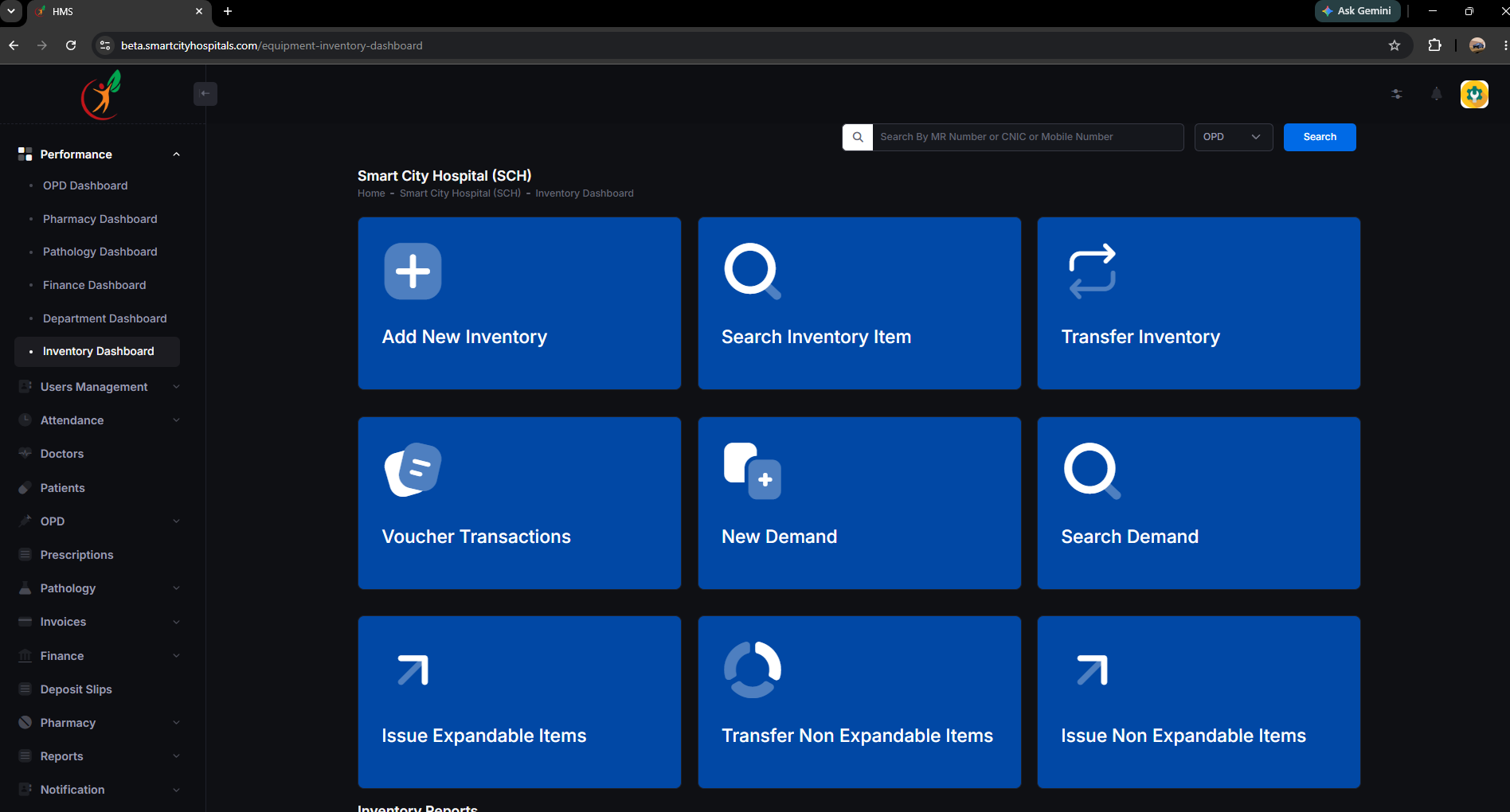
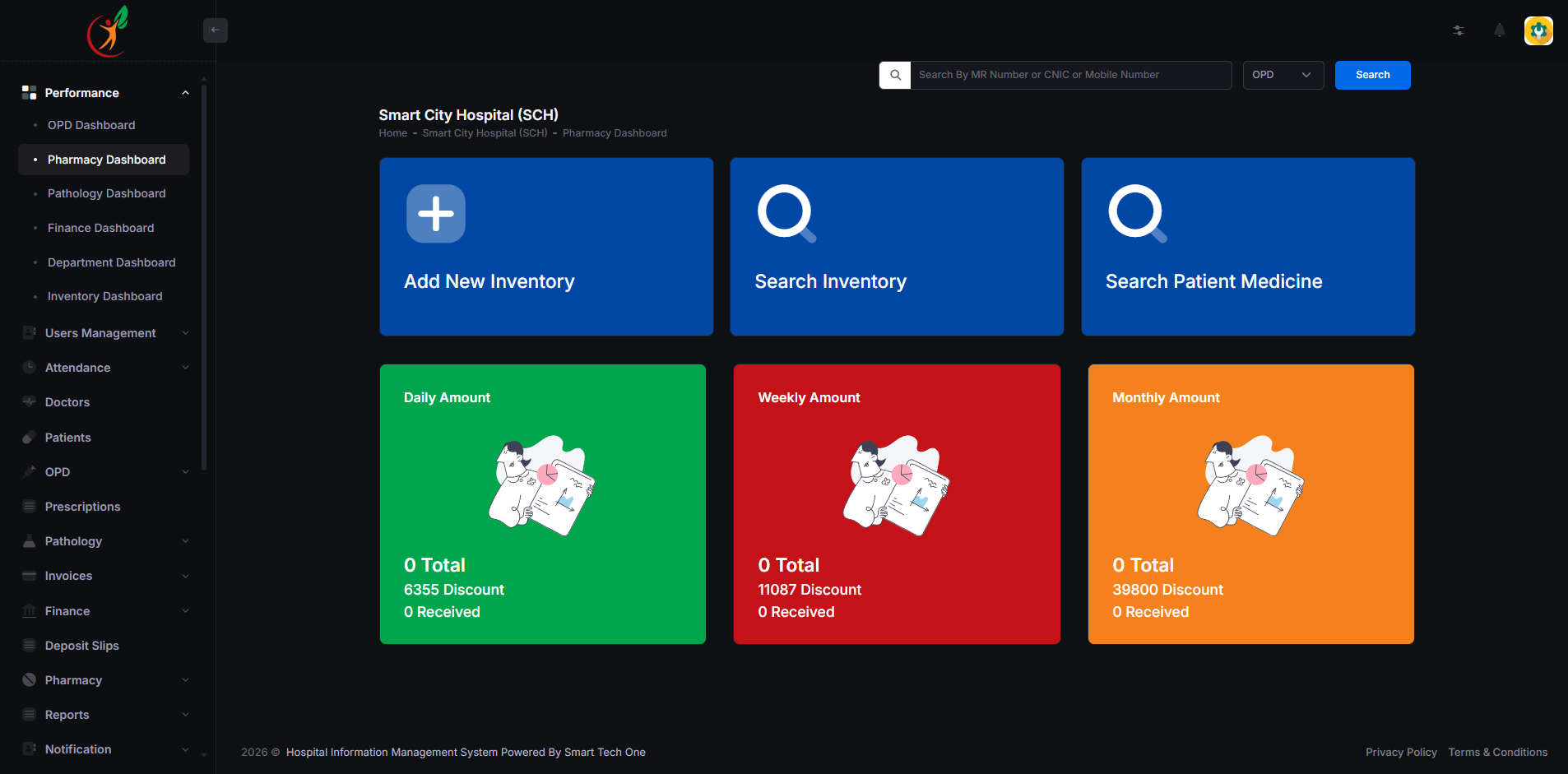
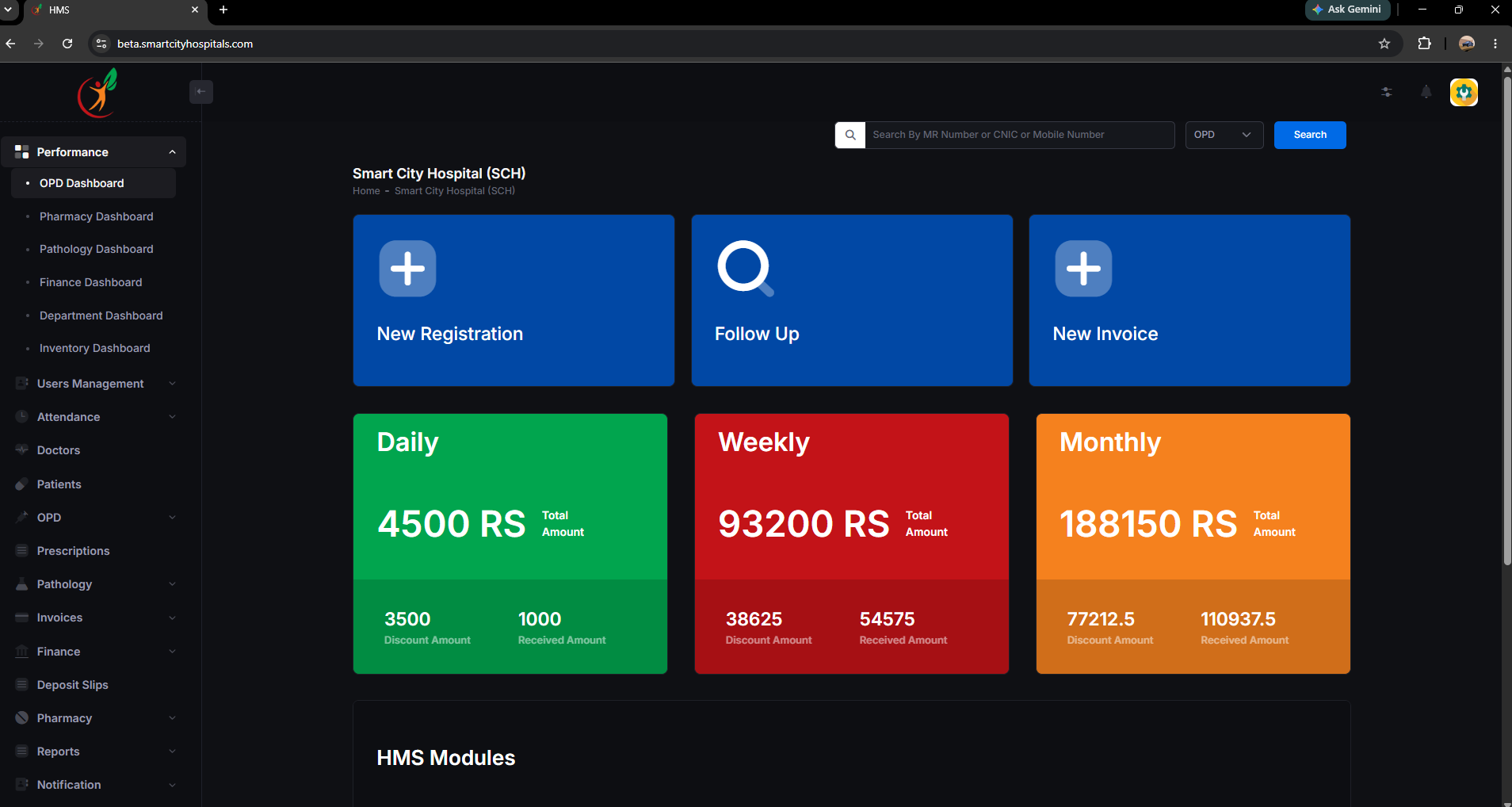
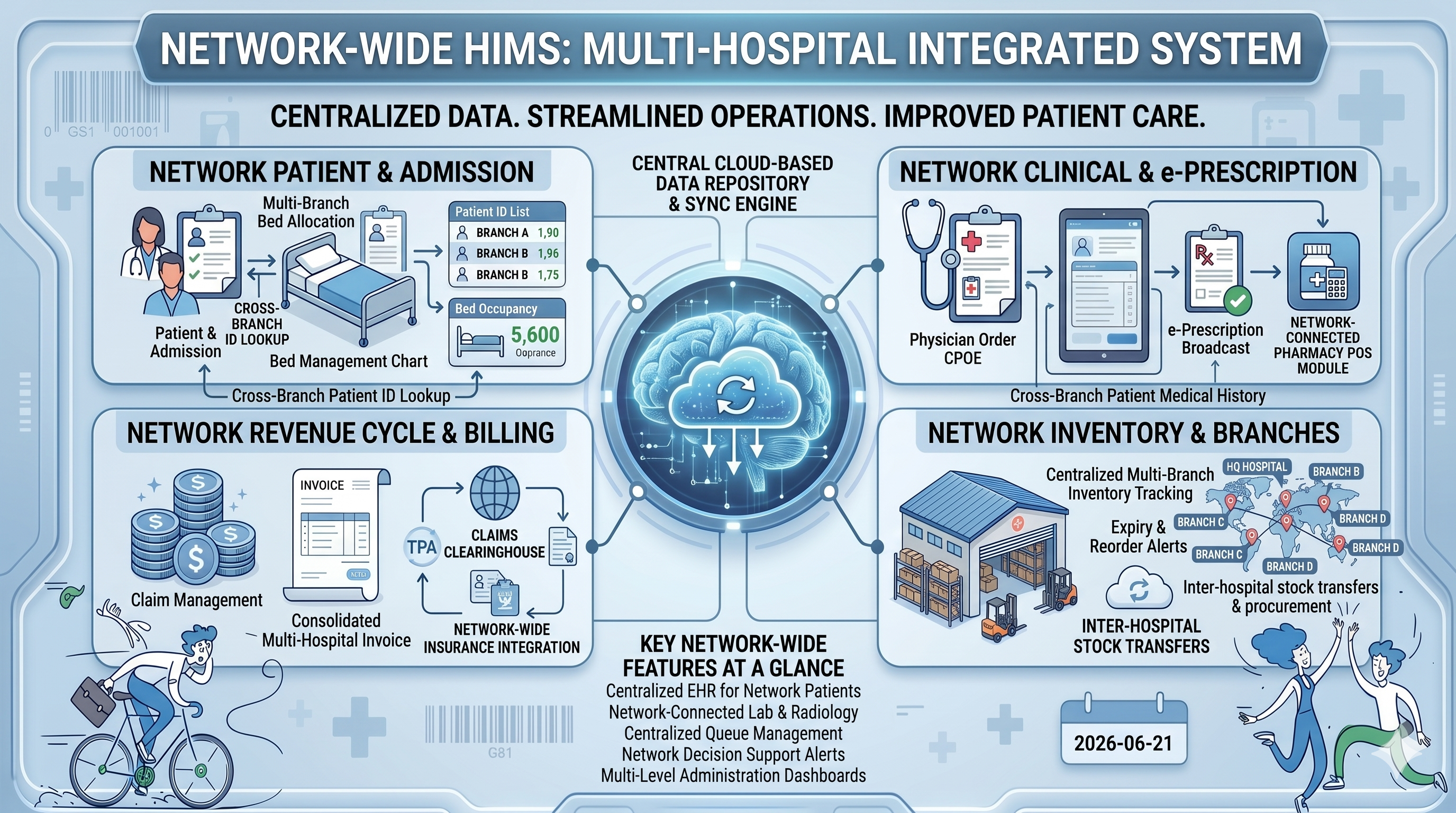
A dynamic reporting and interface module that provides customized home screens based on both the tenant (the specific hospital/clinic) and the user's role.
-
Tenant Isolation: A hospital administrator only sees data, branding, and metrics for their specific facility, completely isolated from other hospitals.
-
Role-Specific Views: A Doctor sees their daily patient queue and critical alerts. A Lab Technician sees pending test orders and equipment statuses. A Billing Manager sees daily revenue and pending claims.
2. Multi-Role User Management System
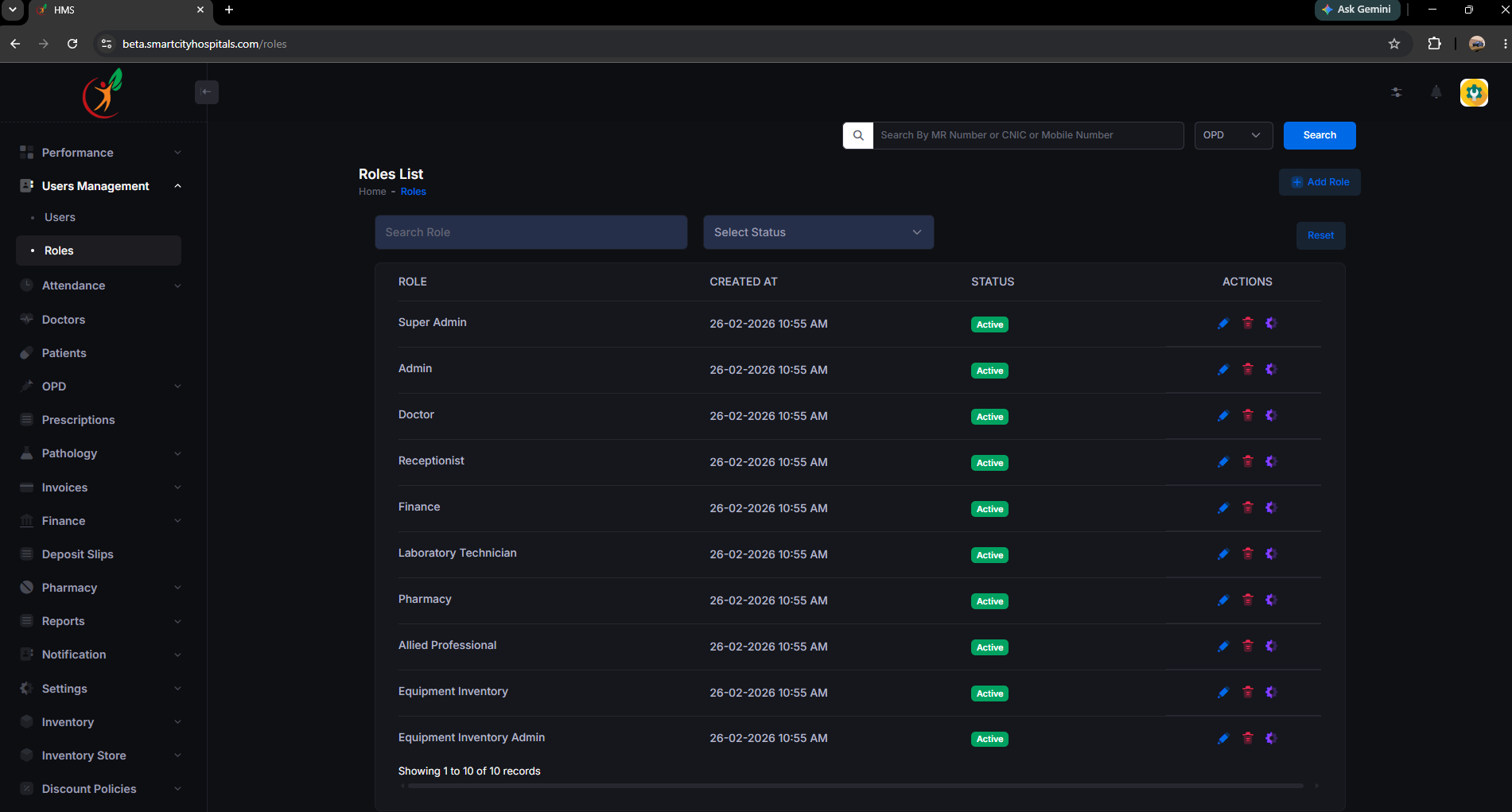
A comprehensive Role-Based Access Control (RBAC) engine that dictates exactly who can see and do what within the system.
-
Granular Permissions: Allows administrators to create custom roles (e.g., "Attending Doctor," "Resident Doctor," or "Lab Technician") with specific permissions across different areas of the application.
-
Hierarchical Control: Supports both System Super-Admins (managing the architecture across all hospitals) and Tenant Admins (managing staff strictly within their own hospital).
-
Security & Compliance: Enforces strict data privacy, ensuring staff only access the records necessary for their specific job function.
3. Doctors Management
A comprehensive module for managing the hospital's medical staff, their schedules, and clinical workload.
-
Profile & Credentialing: Stores doctors' specializations, license information, contact details, and department associations.
-
Roster & Availability: Manages shift schedules, leave requests, and available consultation slots, feeding directly into the appointment booking system.
-
Performance & Workload: Tracks the number of consultations, assigned inpatients, and procedures performed by each doctor for operational and payroll/commission tracking.
4. Patient Management & Centralized Data Bank
The core demographic and clinical repository for all patients, driven by a unique Medical Record (MR) identifier.
-
MR Number Indexing: Automatically generates and assigns a unique MR number to every new patient upon registration, ensuring no duplicate identities within the tenant.
-
Centralized Data Bank: Acts as the single source of truth. By searching an MR number, the system instantly fetches the patient's entire longitudinal history—including past OPD visits, IPD admissions, lab results, prescriptions, and billing histories.
-
Lifecycle Tracking: Manages the full patient journey from initial registration and triage to admission, transfer, and discharge (ADT workflows).
5. Paperless OPD (Outpatient Department) Management
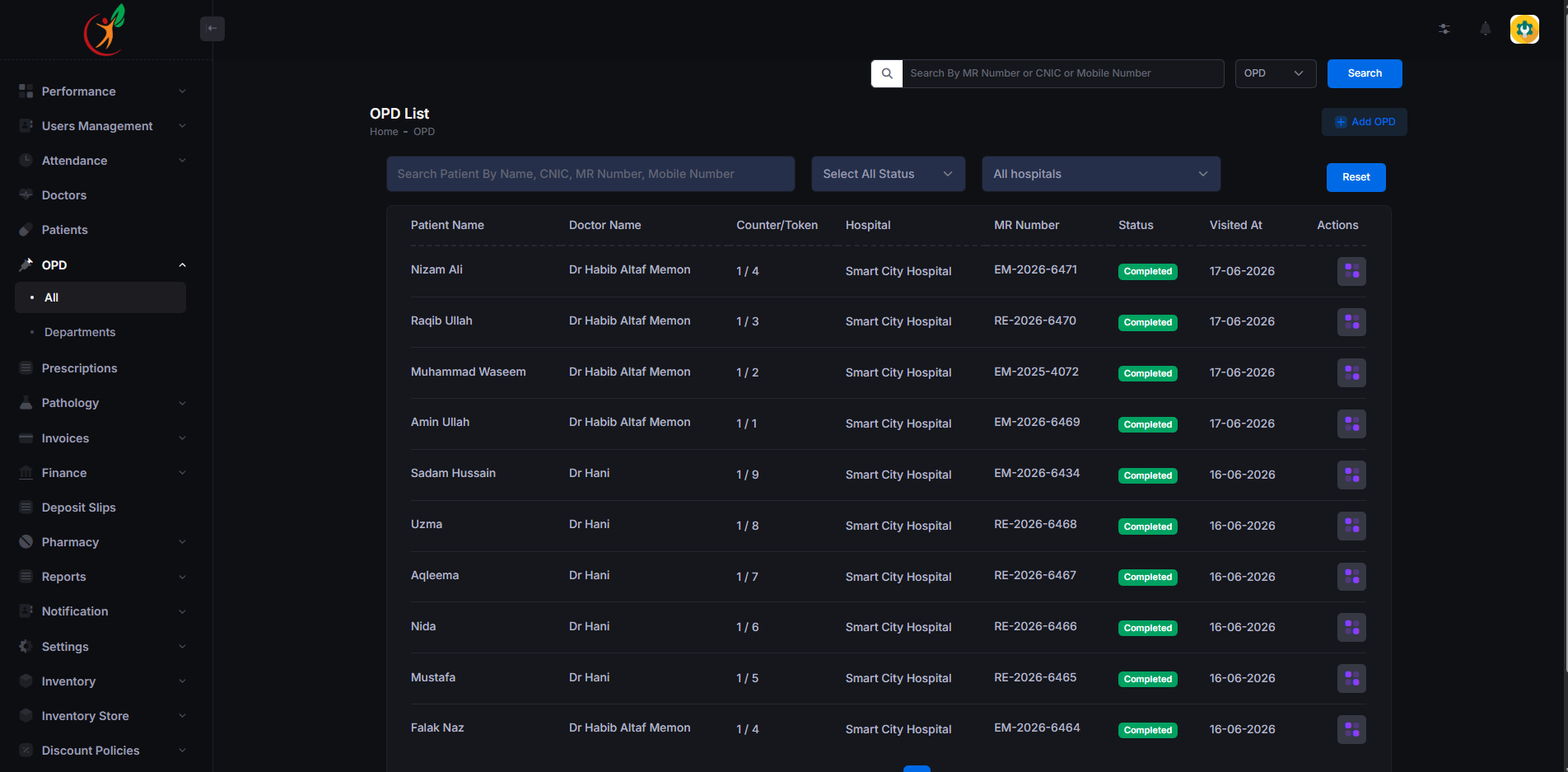
A completely digitized outpatient module designed to eliminate paper trails and streamline clinical consultations from walk-in to prescription.
-
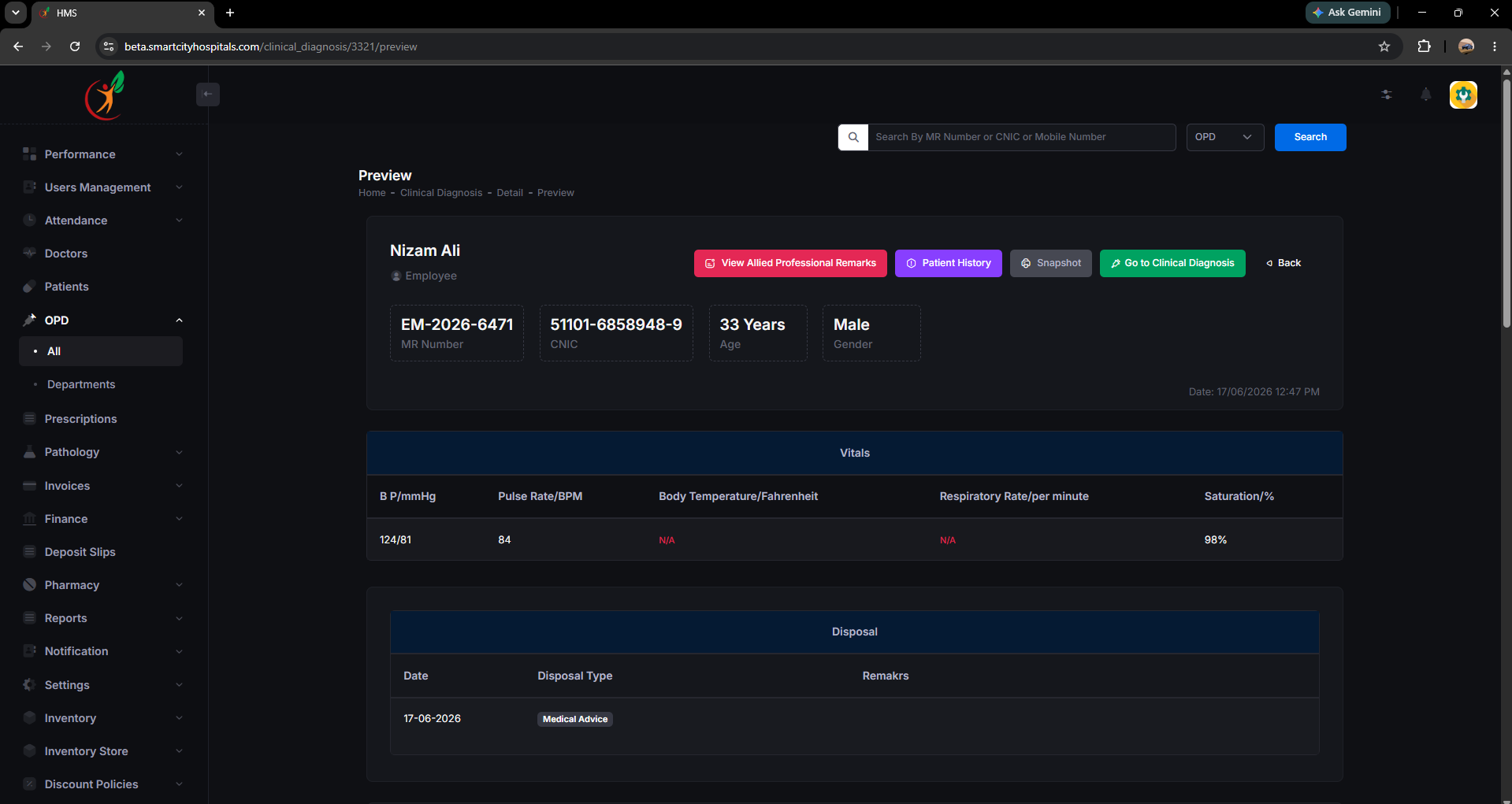
QR-Coded Arrival Slips: Upon arrival, the system generates a physical slip with a unique QR code for the patient. Scanning this code at the doctor's workstation instantly fetches the patient's MR profile, pulling up triage vitals and queue status without manual data entry.
-
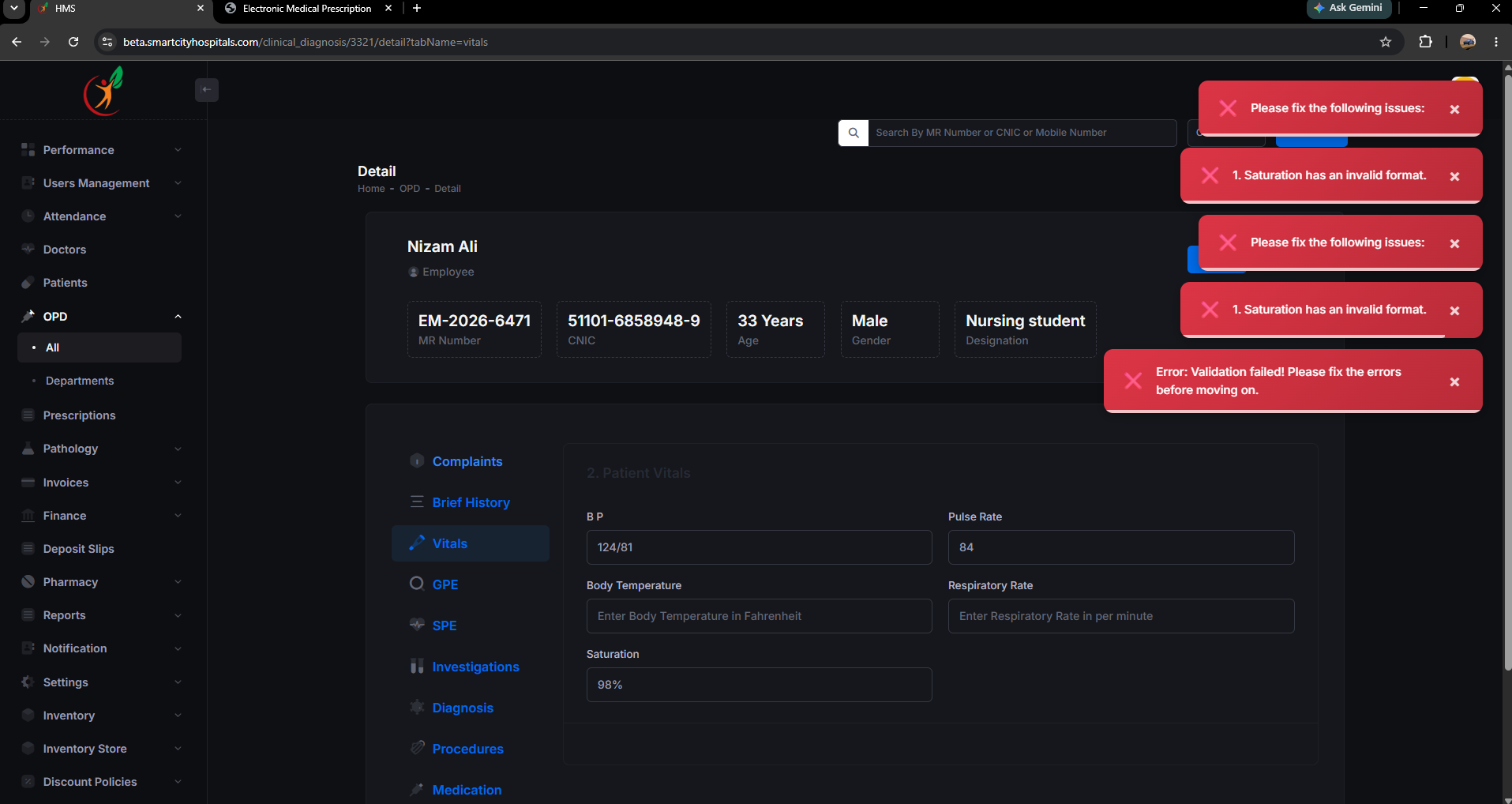
Complaints & Patient Vitals: Allows nursing staff to digitally capture the patient's presenting complaints and routine vitals (blood pressure, heart rate, temperature, weight) during initial triage.
-
GPE & SPE Workflows: Provides structured digital forms for General Physical Examination (GPE) and Systemic Physical Examination (SPE), allowing doctors to quickly and systematically record clinical findings.
-
Standardized Clinical Coding: Integrates global healthcare standards. Doctors select diagnoses using the ICD dataset and log interventions using the ICP dataset, ensuring accurate documentation.
-
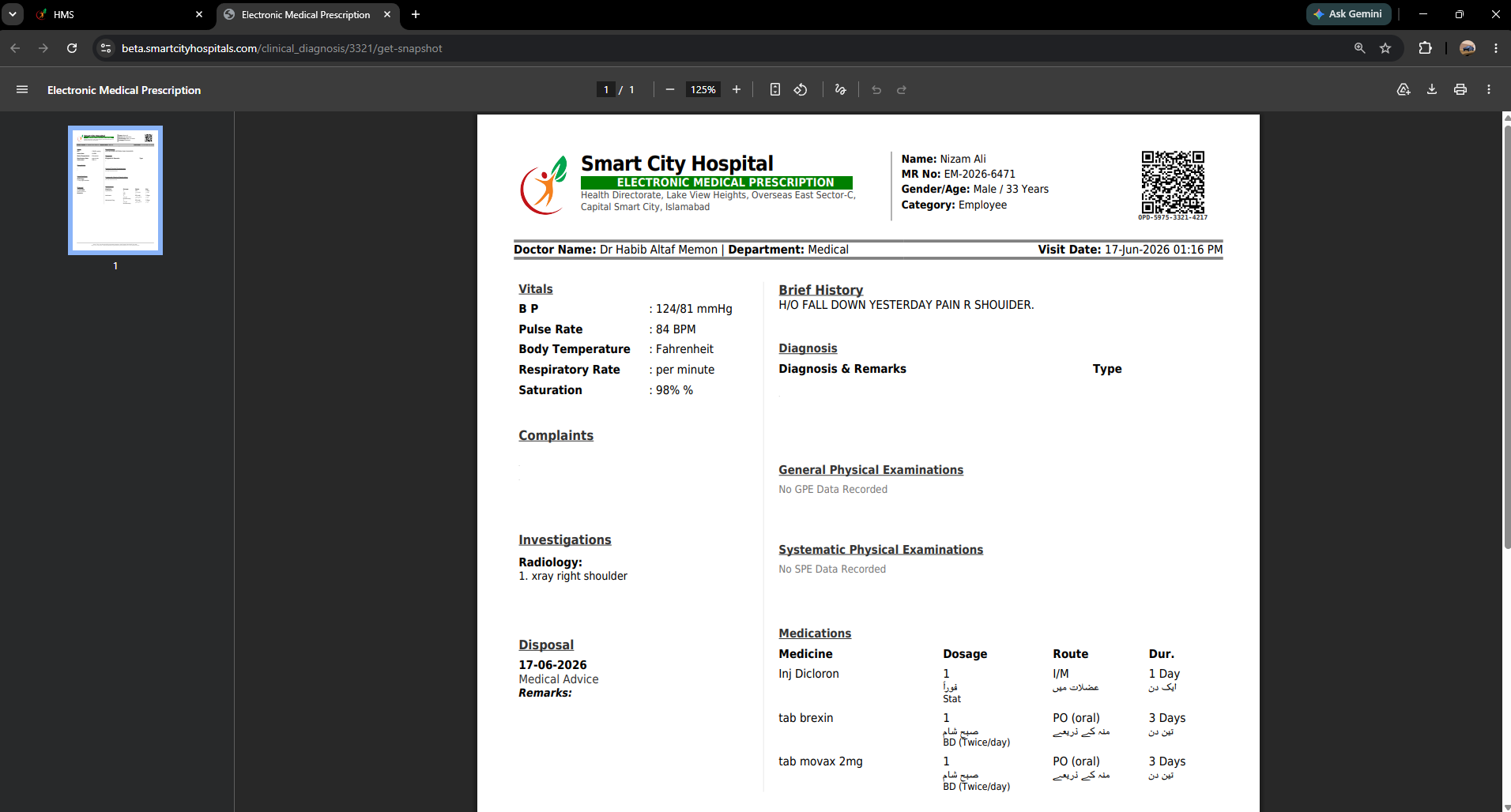
Medicines & E-Prescribing: Includes a comprehensive medication database where doctors can add prescribed drugs along with specific dosage instructions, frequency, route of administration, and duration.
-
A4 Clinical Snapshot Generation: Upon finalizing the consultation, the system compiles the entire visit—vitals, examinations, ICD/ICP codes, referrals, and medicine instructions—into a clean, standardized snapshot that can be immediately printed on A4 paper for the patient's physical records or pharmacy use.
-
Internal & External Referral System: A built-in routing network for sending patients to other internal departments or generating secure referral documents for outside specialists.
6. Pharmacy & Inventory Management
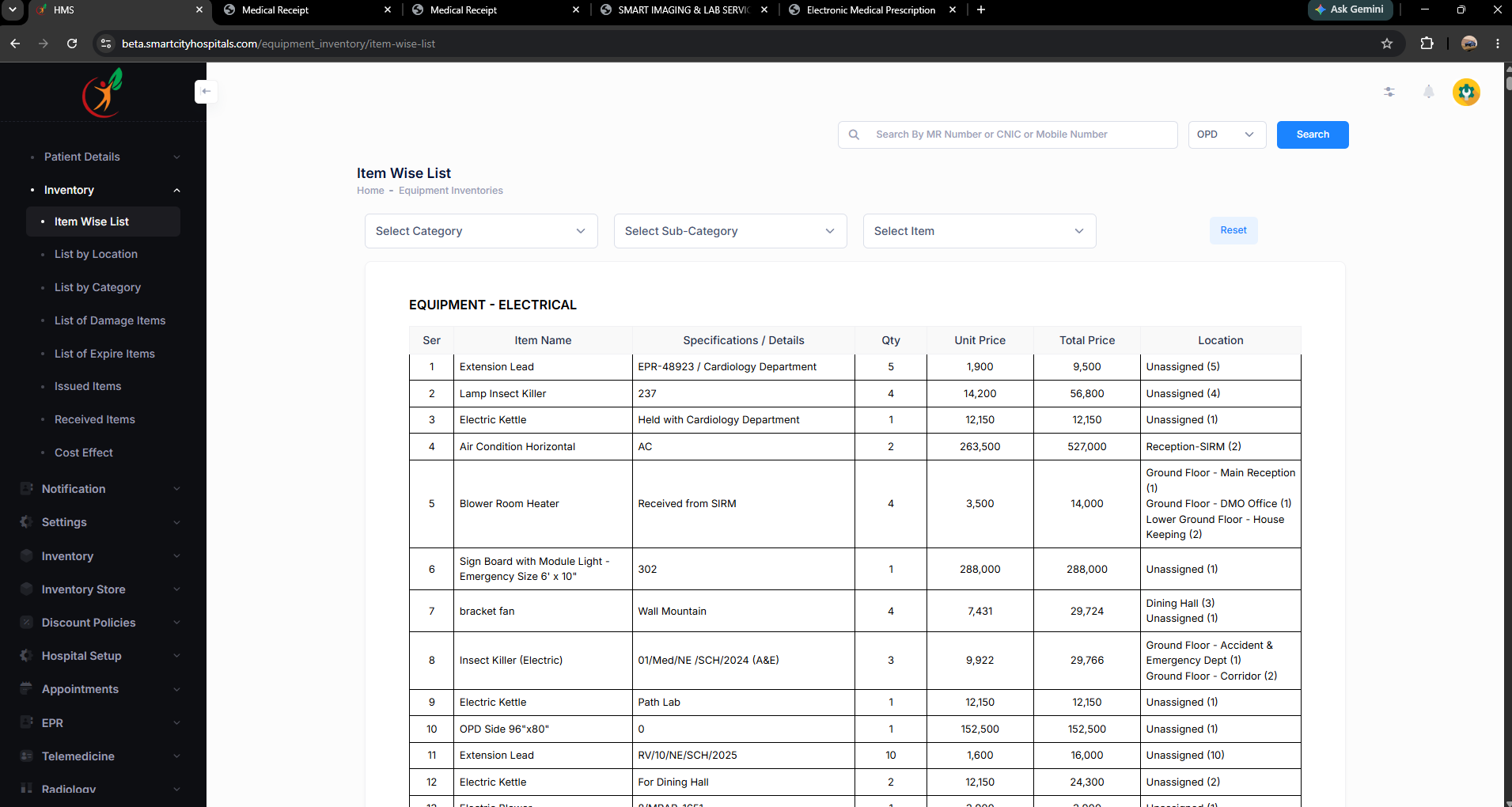
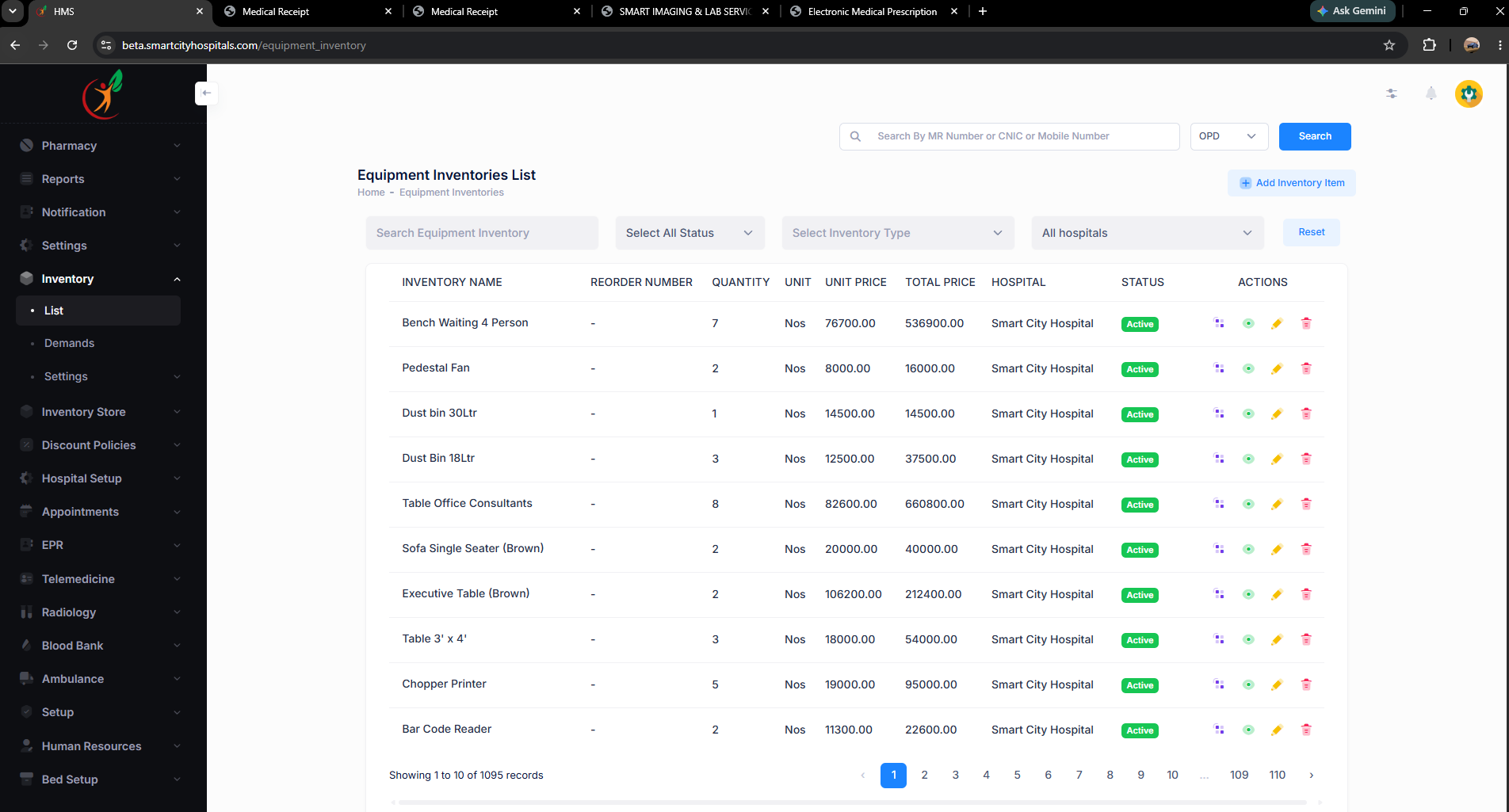
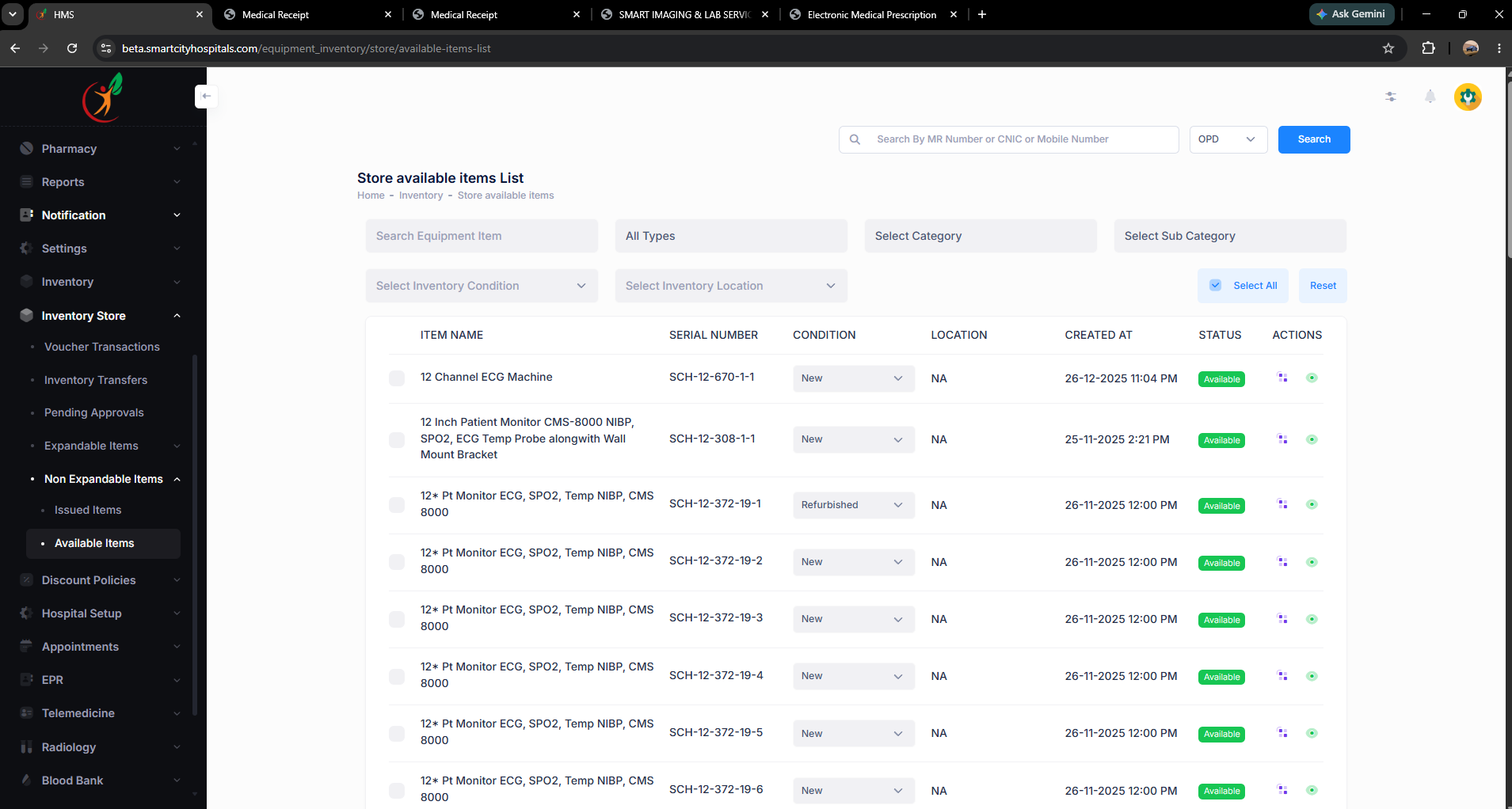
A robust stock and dispensing module designed to track medications down to the granular batch level, directly integrating with the OPD.
-
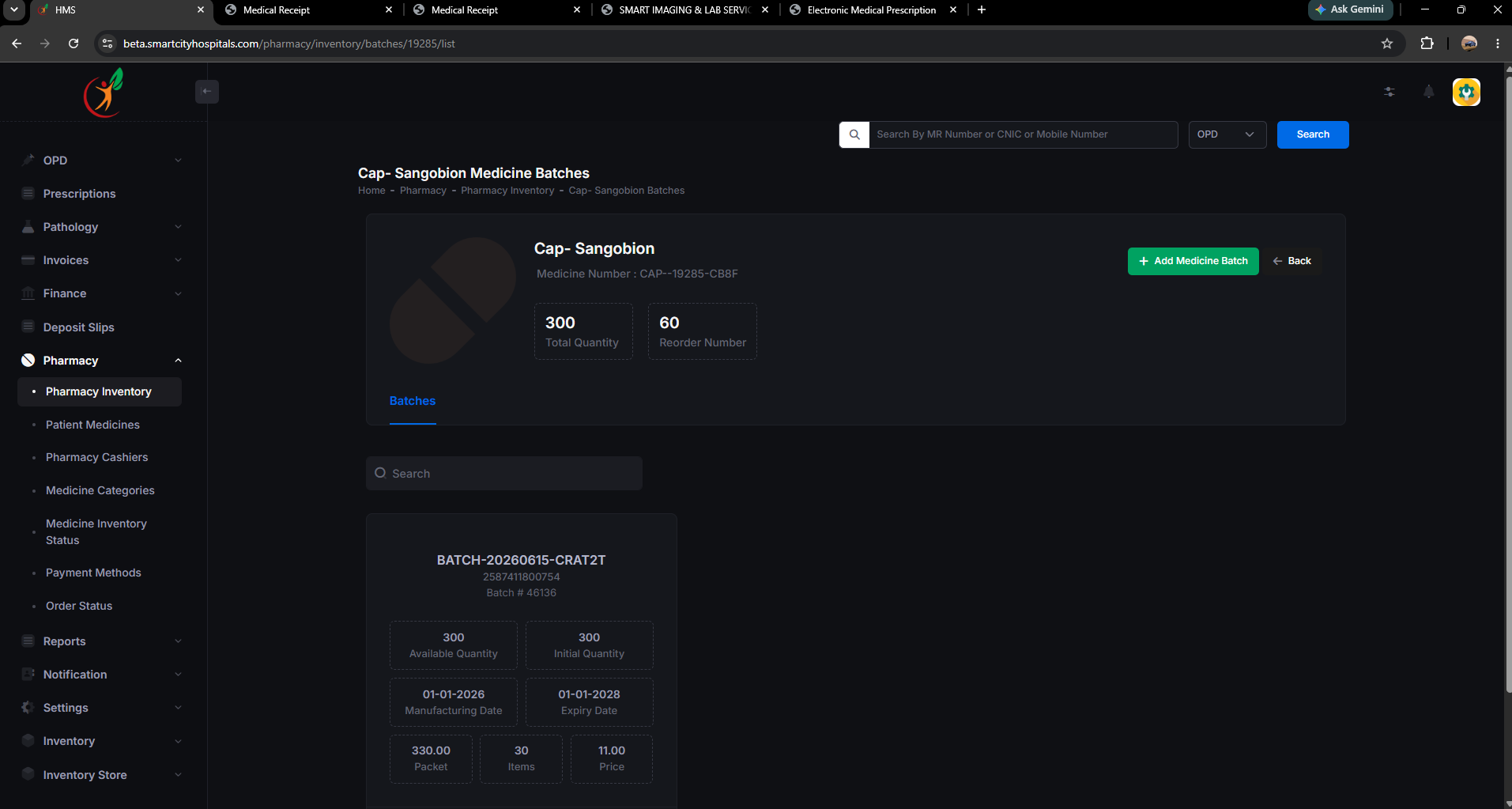
Barcode-Based Batch Management: Handles multiple batches of the same medication seamlessly. By scanning barcodes, the system tracks specific batch numbers, varying expiry dates, and supplier pricing. This ensures strict adherence to FEFO (First-Expire, First-Out) rules and accurate stock valuation.
-
E-Prescription Integration: Directly imports digital prescriptions generated from the OPD module, drastically reducing manual entry errors and speeding up the fulfillment process at the counter.
-
Stock & Expiry Alerts: Automatically monitors inventory thresholds and triggers alerts for low-stock items or medications nearing their expiration date to minimize wastage.
7. Laboratory Information System (LIS)
A centralized module for processing diagnostic tests, managing sample workflows, and delivering accurate medical results.
-
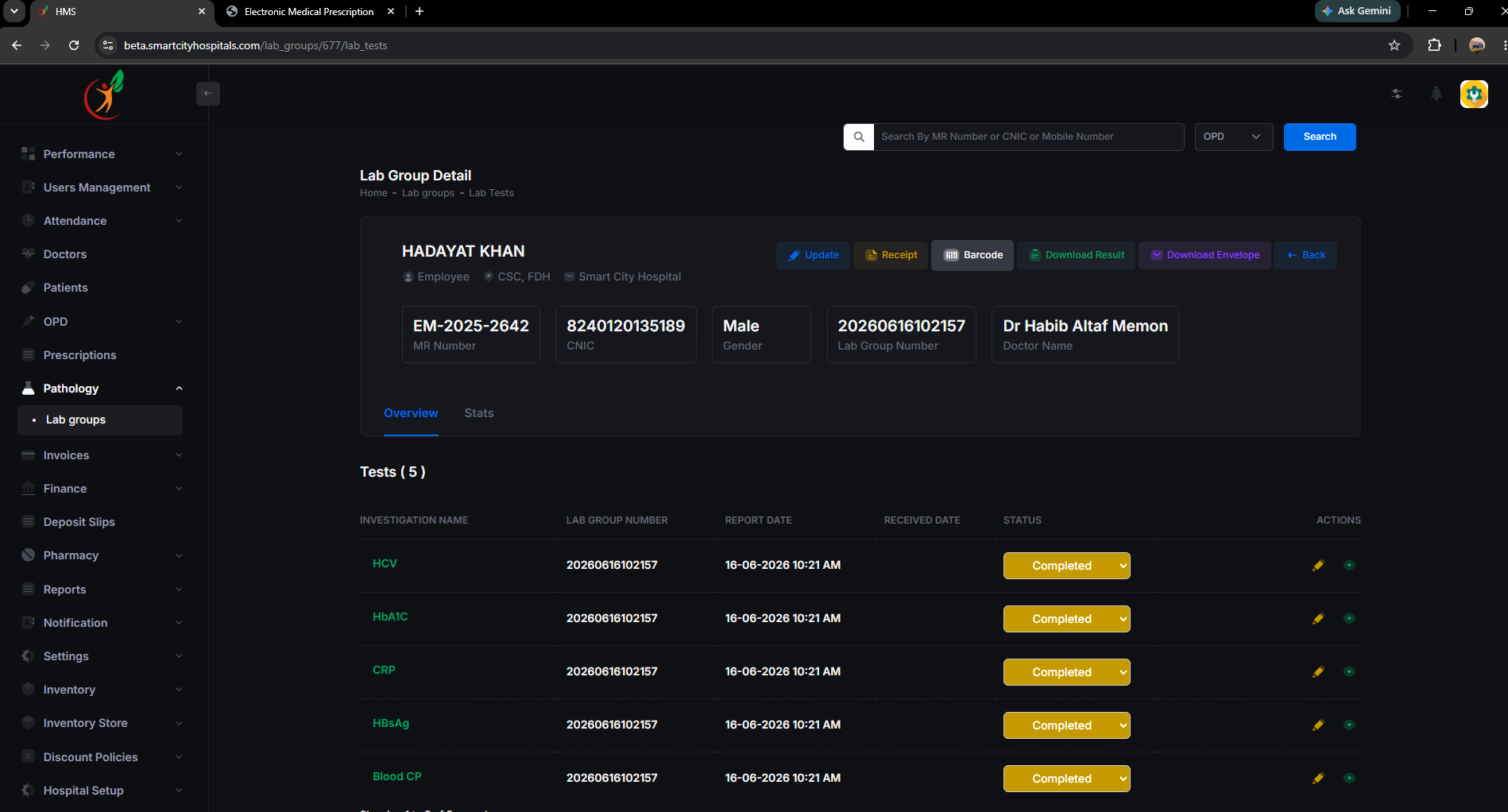
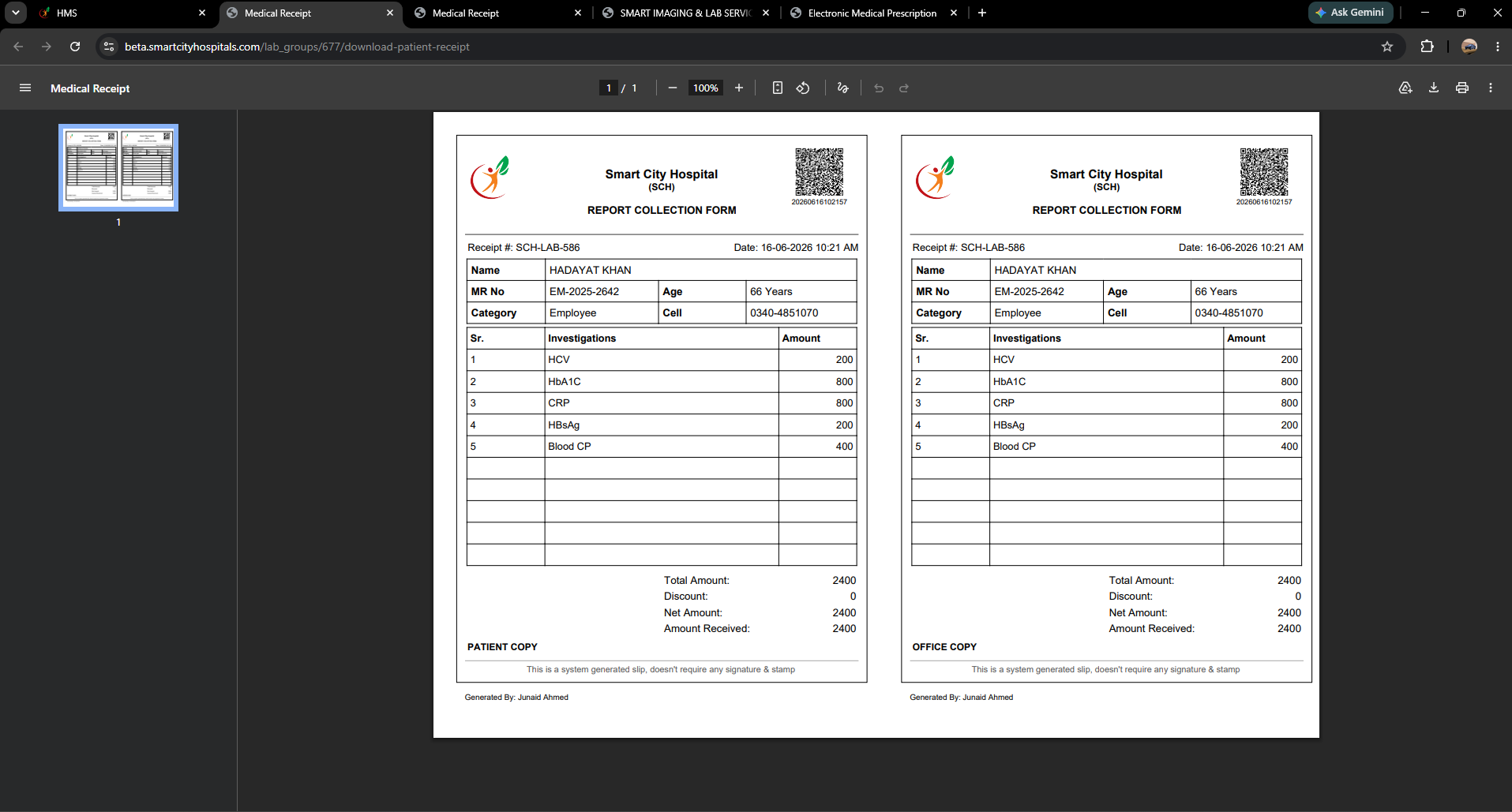
Barcode-Based Specimen Tracking: Generates unique barcodes for all sample collections (blood, tissue, urine, etc.). This ensures end-to-end traceability from the moment the specimen is drawn at the phlebotomy station, through analyzer processing, to final disposal, completely eliminating patient mix-ups.
-
Results Processing & Verification: Provides a structured interface for Lab Technicians and Pathologists to input, review, and medically verify diagnostic test results.
-
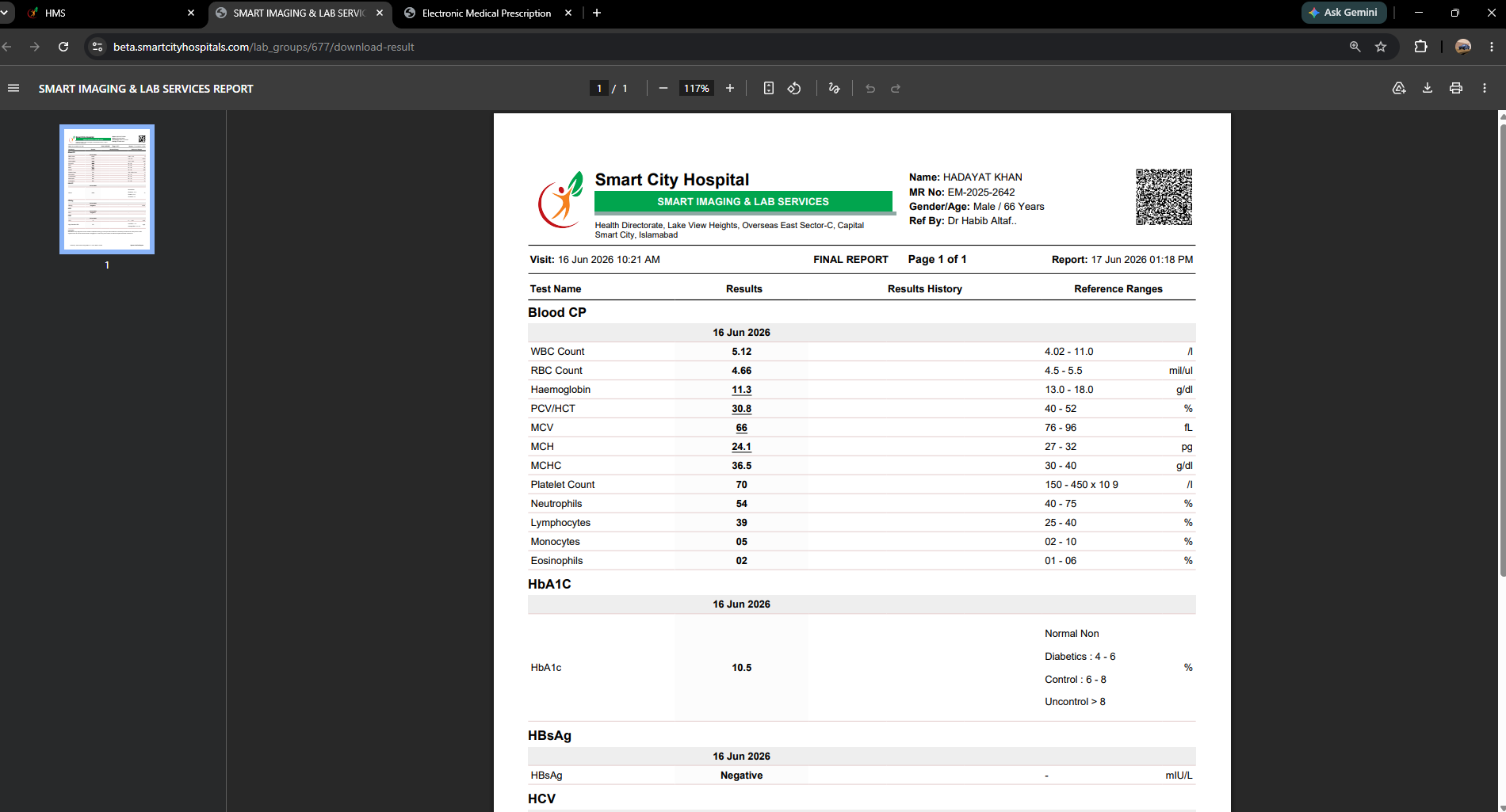
Integrated Reporting: Once verified, the lab results are instantaneously pushed to the patient's Centralized Data Bank (MR profile) and alert the prescribing doctor's dashboard, ensuring zero delay in clinical decision-making.
8. Billing & Finance Management
The central financial engine that consolidates revenue streams, verifies transactions, and maintains immutable ledgers for hospital operations.
-
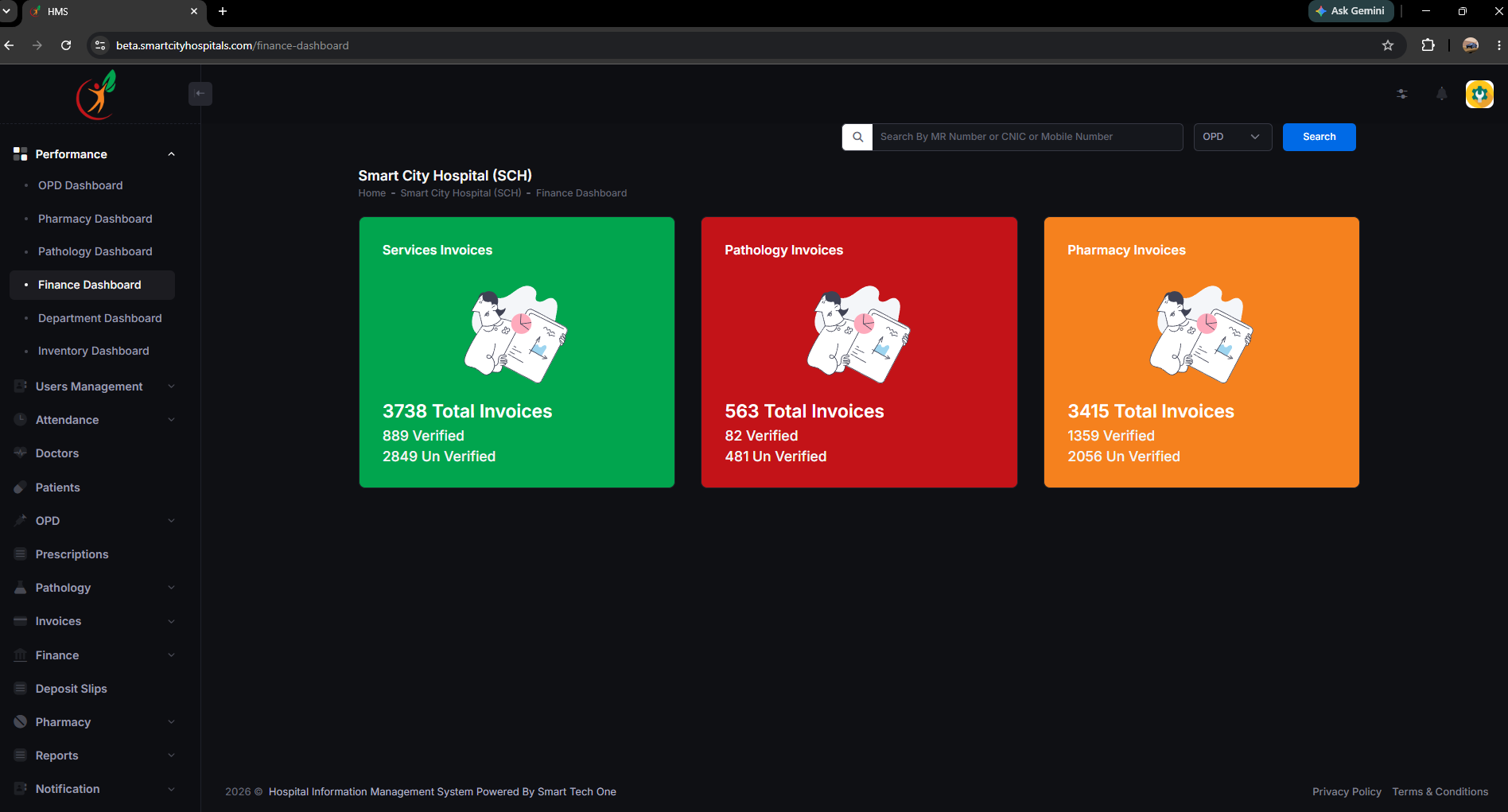
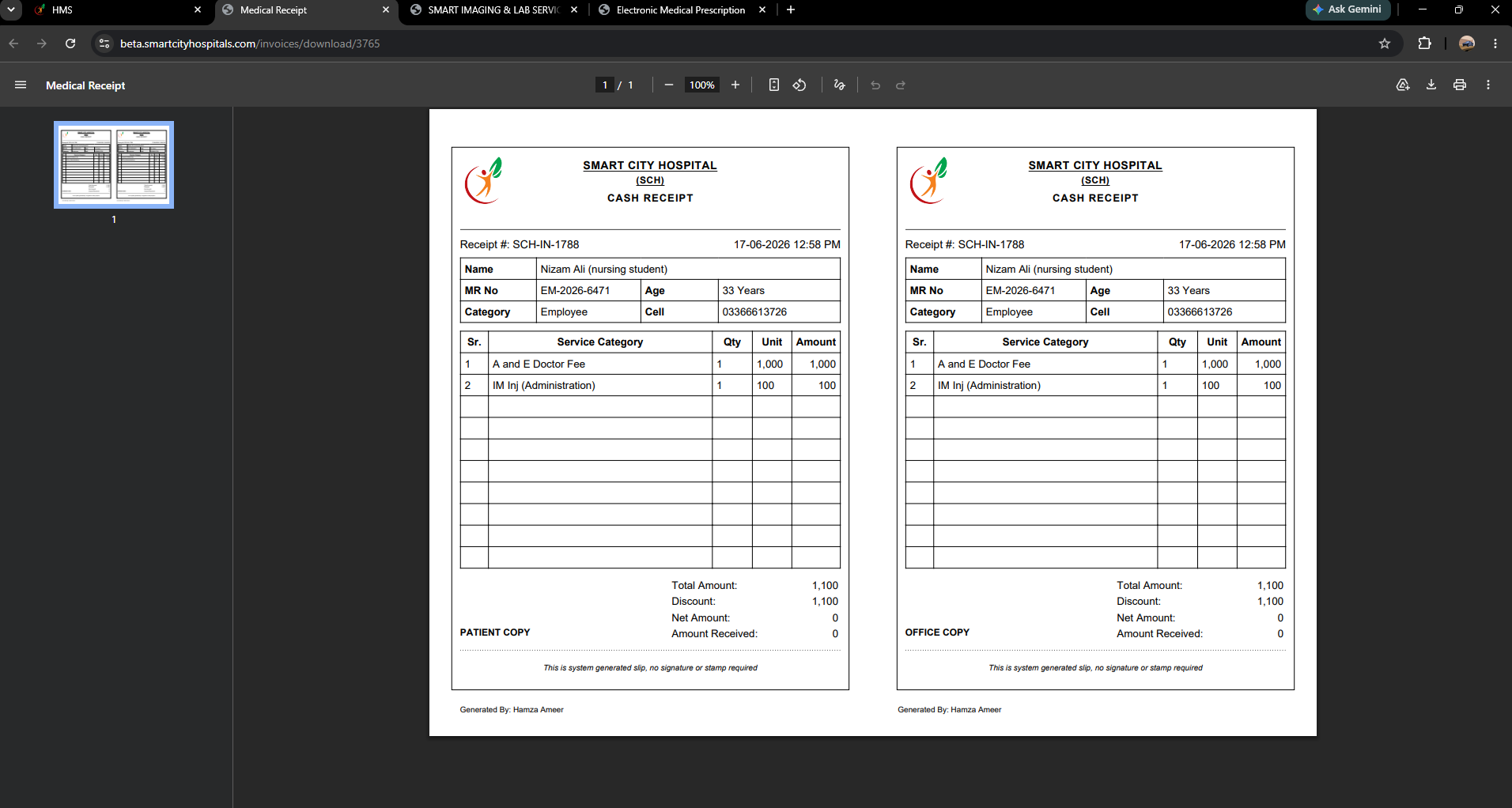
Centralized Invoice Verification: Automatically pulls billable services from all departments—OPD consultation fees, lab test charges, and pharmacy bills. Finance staff can review, verify, and approve these consolidated service invoices before final billing or insurance claim submission.
-
Record Keeping & Hospital Stats: Maintains a secure, permanent record of all verified invoices and transactions. This data feeds directly into the dashboard to generate real-time hospital statistics, tracking revenue by department, daily cash collections, and overall financial health.
-
Audit Trails: Ensures every financial action (discounts applied, invoices voided, payments received) is logged against a specific user role for complete transparency and audit readiness.
Let me know if there are any final modules, like HR or IPD (Inpatient Department), to add to the ecosystem!